Hello everybody. I began this blog because as I was searching around about cloth diapers, I got a little bit confused, so I said to share my experience with anyone who has questions, just like me. Everyhting started one and a half year ago...

Tuesday, October 25, 2011

The cheapest diaper in the world!

So, here it is... The cheapest diaper in the world. It costs only 0 euros.


The non-diaper!
No diaper at all... 
Nothing...


Just to get my point, take a look at these cute litlle chinese wlking around with their bottoms open in the air... 


I got most of the info from thw webpage of Wade Shepard who is traveling around the world the last 12 years and is writting his experience in the

In China, people think it is disgusting to get your underwear dirty! Even if you are a baby. So, weeks after being born, after feeding or sleeping, they keep the baby over...anything and they make specific sounds meaning the two different types of baby-bottom-exit. Until they reach the result they want. After sometime the baby itself reptoduces these same sounds, so that grandmoms, nannies moms etc know when they want to use the "bathroom", wherever they prefer.So, many babies and toddlers walk around wearing their "kaidangku" trousers, so that they can "express" themselves anytime, at anyplace!


In China this old habit is being left aside at the growing areas. On the contrary, the "potty training from birth" is a brand new trend on the West!
You can read all about it on the greek freediaperbabies.blogspot.com

Monday, September 19, 2011

Yes, we have been published!


Yes, we have been published (me and my blog)!


The girls from the magazine 
Logo
added my diapers on their new articles...
Do you want to read it? "Click" (where else?) on the photographs of the sweet diapers hanging to dry...NIce reading (I am sorry, it is only in Greek. But I will translate it soon!)
Nappy-washingN

Friday, September 16, 2011

Hamac

A French company with very special diapers, technologically! I have already talked about them in a previous post.


Home

I liked: -The colours (especially of the Limited edition which is full of 
             French style!) 
           -The design. Fashion...(that is why you can find articlea about them in
             Elle and Madame Figaro)
           -Τhat it is so thin! 
           -You can use a disposable soaker...
           -Τhe reusable soaker is from cotton-hemp and is very thin and 
            very absorbent.
           -Τhe cover dryes...right away!! 
           -All fabrics are according to the Oeko Tex Class 1 standard.
                   
I did not like: - The polyurethane membrane on the cover is tightening with an 
                       elastic thread that is leaving marks on the thighs 
                      and bottom... Just like wearing tight socks.
                     -The cover is a little narrow!
                     -It did not succeed at night with my toddler.
                       
  
I would change: - It bothers me that a "plastic" polyurethane is 
                          touching my baby... I would rather have something 
                          more "cotton-like"
                         -I would use bigger velcro pieces at the closure.


Cost: 32-34 euros. Every box has a wrap, 1 reusable soaker, 2 disposables soakers and 1 liner! You might think that the price is high but you will need so much fewer covers that the cost is reduced significantly...


(Remarks from Hamac:
- our products are certified Okëo Tex Class 1 which is the highest level of certification for the fabrics.- the Hamac is comparable with Gore-Tex, which means this is leakproof and breathable,and our Hamac® is much more breathable than other materia.)

Thursday, September 15, 2011

Diaper reviews. Why this way?


I think that I have to clarify to all of those reading me, why do I write my reviews this way.

First I have to clarify that the diapers I own and review are either bought by myself or send to me by the manufacturing companies (you can see them on the right side of my blog).

I do not sell cloth nappies or make money from this blog. I am doing it just because I like it! I need to share my opinion about them with someone and nobody around me wants to talk about them (a big tear is falling at this point...)


Besides, after 10, 20, 30 years I might be giving interviews to Oprah (or her grandchildren) about my help to promote the cloth-diaper usage to the entire world! 
(I am a very humble person, as you can see....) 


When I write a review I want to do it without judging the type of the diaper. I know that if the nappy is all-in-one, pocket or flat it has advantages and disadvantages by each design!


Nevertheless each mommy (and daddy....should I dare to say it?) has their own preferences. So, I try to present all the special characteristics that I see and I cannot add marks or any other kind of measurement of the diaper's quality...


So, I hope I will help you a little bit, this way... 
(Oprah should know all about this...)

Wednesday, September 14, 2011

New stuff...

I have been starting some new stuff and I need your help and opinion:


1) We have a facebook page: marigoulaandclothdiapers. To get organised and to talk easier to each other...


2) I am trying to find a way to give/share/sell cloth diapers/nappies that you do not fit you or do not need them anymore!


Any ideas?

Monday, September 12, 2011

Fabrics, inside-out!


So far, I have found cloth diapers with cotton, hemp, bamboo... Ok, I think I know what these are! But what is PUL? What is the consistency of microfiber? Who knows anything about jersey?
This is it! I am writing and explaining everything about them:


Waterproofing materials:


PUL: Polyester (the most familiar form is the PET, ie the plastic bottles of water!) coated with a polyurethane film after a special chemical process which removes all the toxic gases used for the production of the cloth.
TPU: Polyester that has been laminated with a thermoplastic polyurethane using a heat bonding process, not chemicals. This process is low in toxicity. Both the TPU laminate and the polyester fabric the laminate is applied to are biodegradable. When composted they will biodegrade in 4-5 years. (Information from Rumparooz which is using this material). 

Fabric of the absorbent diaper

COTTON VELOUR:
A super soft absorbent and stretchy fabric which feels like velvet. It stays lovely and soft, wash after wash. 


                              MINKEE: 100% polyester.
This is the softest, cuddliest fabric we have ever touched. 100% Polyester and best washed cold and line dried or dried on low in the dryer. This fabric is not bulky, it is like the softest velvet but with a flat pile, it washes beautifully.


CUDDLESOFT: 100% polyester and VERY similar to Minkee.

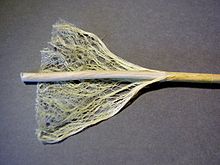
(I have chosen this photo so that you can understand that the same fabric is used in many-many different products)


MICRO-FLEECE: 100% polyester fleece, when used as an inner for a nappy fleece acts as a stay dry layer, letting moisture though to the absorbent layers underneath, but keeping your babies skin lovely and dry.  Micro-fleece is thinner than regular fleece making it better suited for nappy inners.


Differences between Minkee, Cuddlesoft and Micro-Fleece:
Minkee and Cuddlesoft are very similar (They are sourced from different companies, the Cuddlesoft is slightly cheaper but with less colour options.  They are both 100% polyester and are beautifully soft to the touch).  All 3 options act as a stay dry inner (i.e. the wetness travels through the fabric into the absorbent layers underneath) to keep your little one dry.  Some people say that Minkee/Cuddlesoft does not keep their little one as dry as micro-fleece, and is more likely to wick/leak moisture to the outside of the nappy. Minkee/Cuddlesoft is super soft against your little ones skin, it washes well and stays newer looking over time (whereas micro-fleece will bobble a bit in the wash).  Notice that, for Cuddlesoft and Minkee inners they may have residues from the finishing agents used on the fabrics, and therefore it is very important for the first washing to be at 60 degrees, using the full quantity of washing powder recommended by the manufacturer.  You can wash it and wash it, and rinse it and rinse it, but if you don't use the full recommended amount of detergent in your wash, you will not remove any oily residues that may be on the fabric. These fabrics are very good to reduce your baby's irriation, since it does not stay in all that moisture... Trust me, I have a personal experience about it! 

HEMP FLEECE: 
55% hemp and 45% cotton. Will need several washes to reach full absorbency, it is natural fabric, highly absorbent, slim and environmentally friendly but the fabric may stiffen if it is not tumble dried occasionally. (like mine...after one day in the sun it comes out like cardboard). This is why companies that use this material, (like HAMAC) are using 3 layers of hemp and one layer of microfleece, that is touching your baby and is very soft.


MICROFIBER:
 
It is made from 80% πολυεστέρα και 20% polyamide (these are the natural Fibers of wool and silk, that are also made artificially). A Man made fabric which is absorbent, slim, and quick drying. Microfiber does not need to be washed to reach full absorbency. It stays lovely and soft wash after wash.
Lycra binding
Fleece


FLEECE: 100% polyester. When used as an inner for a nappy fleece acts as a stay dry layer, letting moisture though to the absorbent layers underneath, but keeping your babies skin lovely and dry.


LYCRA:  Lycra binding is used on our nappies to keep the outer fabric from touching your babys skin and adding extra funkiness.


SUEDE CLOTH:
It feels like suede leather but is 100% polyester. It is thiner than microfleece but with the same capacity to axclude moisture from the baby's skin.


COTTON JERSEY: Of'course, 100% cotton. 

"Jersey" is the typical knitting type. This fabric is very soft, absorbent and stretchy, making it an ideal fabric for washable nappies, eco sanitary pads, clothes, bedding, the list goes on.


ORGANIC COTTON JERSEY: Same as above but this fabric is also organic. Organic fabrics are produced without the use of hazardous chemicals which can be harmful to the environment and the health of the people involved in the manufacturing process. 


TERRY:


100% cotton. The fabric that is used for towels. Very absorbent and very cheap (of'course not organic!)


BAMBOO TOWELLING: 90% bamboo and 10% polyester. I have to make something clear hear:
1) Pure bamboo is an environmentally friendly material, completely biodegradable. On the contrary of cotton, it can be cultivated without pesticides. 
2) The bamboo fabrics are made after the chemical treatment of the bamboo, so that the big fibers will cut down and it will be possible to make them thread (many thanks wiki!). In Canada and the USA, since 2009, it is obligatory to use the term "rayon from bamboo", instead of "bamboo". Rayon is a semi-synthetic fiber that is produced after the chemical treatment of the wool and other plant fibers.
3) Studies are being made regarding the antimicrobial action of the bamboo fabric. There are two different opinions, regarding this claim. Some diaper (and other clothing) manufacturers say (Green Earth Bamboo) that it is antimicrobial. They even appear evidence about this action staying vivid even after 100 wash-cycles. At the same time, other researchers  (Federal Trade Commission) claim the exact oposite, because the chemical treatment of the bamboo-particles, is destroying its antimicrobial property ...
4) It has a much higher absorbency than cotton, more than 60%, and it dryes 20% faster (I have not found the proper bibliography for these two...).

LUXURIOUS BAMBOO TOWELLING:   65% bamboo 28% cotton and 7% polyester backing for durability. This fabric has all the great qualities of our regular bamboo towelling, and is lovely and soft to the touch.  It looks like normal looped towelling on one side and on the other side (the right side) it looks more like Minkee, in that it has a straight cut pile. 


ORGANIC BAMBOO VELOUR: It comes from 70% bamboo, 28% cotton and 2% polyester backing for durability. A super soft absorbent and stretchy fabric which feels like velvet. It stays lovely and soft, wash after wash. 


I think this is it... 
I wrote about everyhting. 
If I forget anything, I will be back...


(NOTICE: Most of the evidence come from  Weenotions, a small family business making cloth nappies at request!
(I haven't been able to get one yet...)  

Monday, September 5, 2011

Baba + Boo


One more mother starting a nappy-producing company! I think this is the cheapest pocket nappy in the market! It has a PUL cover and comes with two microfiber inserts.


I liked: - Their price....
           - Their snaps close very easily and they fit very well around legs of 
              many different sizes. I have not seen any leaking yet!
           - You get it with two inserts that absorb many "stuff" and have
             snaps to make them smaller, when neccesary.
           - That you can get "limited edition" paterns! The collection changes
              constantly!
           - The great service from Eve!
                                       
I did not like: - That after a while I have seen some colours fading!
                    - I found in some nappies, when I opened the package, 
                      many threads and other, very small, left-over cloths.
                    -Ι saw the same paterns in many small nappy companies, 
                     in fabric selling e-shops etc.                         

I would change:  I would put in the package, one microfiber and one bamboo insert!


Cost: 9,98 euros from the company's site. Calculate the shipping cost, which is very low. (The shipping cost from UK is generally very low!)